Use Desktop for Better Experience
April 2026 Global Market News
April 2026 was the month when the oil shock collided with everything else. A short-lived early-month ceasefire briefly opened the Strait of Hormuz, only for renewed attacks on shipping, a U.S. naval blockade, and the collapse of peace talks to push Brent crude above $120 per barrel by month-end. In the United States, payrolls bounced back but headline inflation re-accelerated to a near three-year high, the Fed delivered its most-divided hold in decades, and Q1 GDP rebounded even as real disposable income shrank. Hong Kong kept setting records — HKEX posted record Q1 profit and revenue, issued its first stablecoin licences, and Victory Giant's blockbuster IPO confirmed the city's IPO flywheel is real. Globally, the Fed, ECB, Bank of England, and Bank of Canada all stayed on hold, but for very different reasons; the RBA, having already hiked twice in 2026, did not meet.
FINANCIAL
Ryan Cheng
5/1/20266 min read
United States 🇺🇸
-Apr 3: The labor market clawed back February's drop-
The BLS said total nonfarm payroll employment increased by 178,000 in March, and the unemployment rate changed little at 4.3 percent, with job gains in health care, in construction, and in transportation and warehousing, while federal government employment continued to decline. The bounce was real, but flattered by base effects: the change in nonfarm payrolls for January was revised up by 34,000, from +126,000 to +160,000, and the change for February was revised down by 41,000, from -92,000 to -133,000. Nonfarm payrolls rose a seasonally adjusted 178,000 during the month, a reversal from the 133,000 decline in February and better than the Dow Jones consensus estimate for 59,000— the strongest print since December 2024, but partly mechanical as struck healthcare workers returned.
-Apr 10: CPI confirmed the energy-shock is now in the data-
The Consumer Price Index for All Urban Consumers (CPI-U) increased 0.9 percent on a seasonally adjusted basis in March, after rising 0.3 percent in February. Over the last 12 months, the all items index increased 3.3 percent before seasonal adjustment. The index for energy rose 10.9 percent in March, led by a 21.2-percent increase in the index for gasoline which accounted for nearly three quarters of the monthly all items increase. The annual inflation rate in the US jumped to 3.3% in March 2026, marking the highest level since May 2024 and a sharp increase from 2.4% in both February and January, with the rise primarily driven by higher energy costs (12.5%), mostly gasoline (up 18.9%) and fuel oil (44.2%), due to the war with Iran. Core CPI was steadier — core inflation which excludes food and energy, also picked up though much more moderately, to an annual rate of 2.6%, compared to forecasts of 2.7%, and on a monthly basis core consumer prices increased by 0.2% — meaning the headline shock had not yet fully spread.
-Apr 14: PPI said pipeline pressure was building, not fading-
The Producer Price Index for final demand increased 0.5 percent in March, seasonally adjusted, after moving up 0.5 percent in February and 0.6 percent in January. On an unadjusted basis, the index for final demand rose 4.0 percent for the 12 months ended in March, the largest 12-month advance since increasing 4.7 percent in February 2023, attributable to a 1.6-percent advance in the index for final demand goods, while prices for final demand services were unchanged. The composition matters: more than half of the March increase in the index for processed goods for intermediate demand can be attributed to a 42.0-percent jump in prices for diesel fuel, telling the Fed that the energy shock was still moving up the supply chain.
-Apr 28–29: The Fed held — and then split four ways-
The FOMC kept the federal funds target range at 3.50%–3.75%, but the meeting itself was anything but routine. Amid expectations for a routine vote to hold the benchmark funds rate steady, the FOMC instead was split along 8-4 lines, with officials expressing different reasons for their vote. The last time four FOMC members dissented was in October 1992. Voting against this action were Stephen I. Miran, who preferred to lower the target range for the federal funds rate by 1/4 percentage point at this meeting; and Beth M. Hammack, Neel Kashkari, and Lorie K. Logan, who supported maintaining the target range for the federal funds rate but did not support inclusion of an easing bias in the statement at this time. The post-meeting statement said "Inflation is elevated, in part reflecting the recent increase in global energy prices"[2], and markets had been widely expecting the hold and in fact are pricing in no changes the rest of this year and well into 2027.
-Apr 30: Q1 GDP rebounded but PCE confirmed the inflation re-acceleration-
Real GDP increased at an annual rate of 2.0 percent in the first quarter of 2026, while in the fourth quarter of 2025 real GDP increased 0.5 percent. However, the PCE price index for March increased 0.7 percent from the preceding month. From the same month one year ago, the PCE price index increased 3.5 percent. Excluding food and energy, the PCE price index increased 3.2 percent from one year ago. When accounting for inflation, disposable income dropped by 0.1%, the second consecutive monthly decline — confirming the real-income squeeze had begun.
Hong Kong 🇭🇰
-Apr 9: Q1 IPO surge confirmed Hong Kong's global lead-
Hong Kong's IPO market raised HK$109.9 billion across 40 listings in 2026 Q1—an increase of 489% in funds raised and 167% in deal volume compared to 2025 Q1. Hong Kong once again topped the global rankings in IPO proceeds.
-Apr 10: HKMA opened a new chapter — stablecoin licences
The HKMA granted stablecoin issuer licences under the Stablecoins Ordinance to Anchorpoint Financial Limited and HSBC for issuing stablecoins in Hong Kong. With only a 5.6 percent approval rate from the 36 formal applications, the outcome underscores the HKMA's measured strategy.
-Apr 21: Victory Giant's debut showed institutional appetite was holding-
Shares in Victory Giant Technology surged as much as 60% on Tuesday after the Chinese company's blockbuster IPO — the biggest in Hong Kong this year. Victory Giant had raised about HK$20.1 billion ($2.57 billion) in the city's biggest listing in about seven months.
-Apr 29: HKEX delivered a record Q1 — and not just from IPOs-
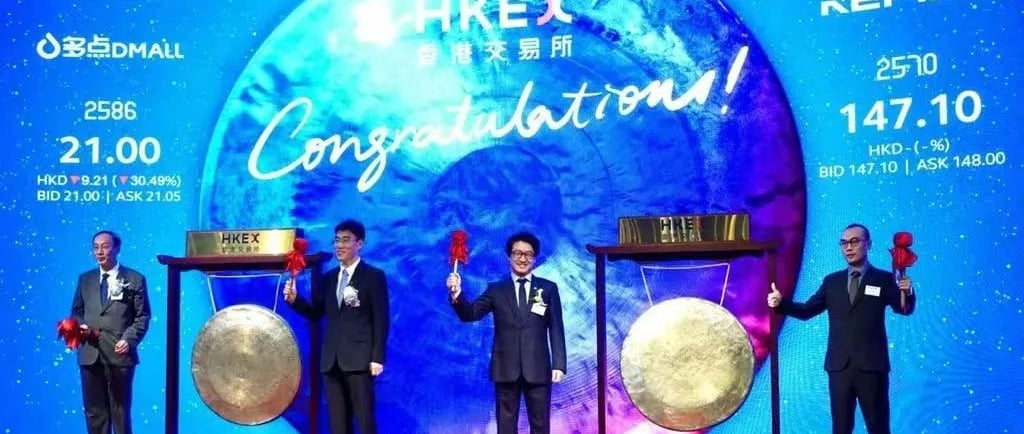
Profit attributable to shareholders rose to HK$5.19 billion (US$662 million), a 27% increase from the year before. Core business revenue reached HK$7.69 billion, up 22% compared to the same period of last year due to increased trading volumes in the cash and commodities markets. Headline average daily trading turnover reached HK$276.7 billion during the period, 14 percent higher than the same period last year, marking its second-highest quarterly level. The IPO pipeline remained robust, with 431 listing applications under processing as of March 31, up 25 percent from the end of 2025.
-Apr 30: HKMA's reaction to the Fed was steady, not relieved-
The HKMA noted the path of US monetary policy remains quite uncertain, especially as oil prices have remained elevated amid continued tensions in the Middle East region.
Commodities
-Apr 14: IEA's April Oil Market Report rewrote the 2026 balance-
Global oil supply plummeted by 10.1 mb/d to 97 mb/d in March, with continued attacks on energy infrastructure and ongoing restrictions to tanker movements through the Strait of Hormuz leading to the largest disruption in history. Global oil demand is now projected to decline by 80 kb/d on average in 2026, compared to growth of 730 kb/d expected in last month's Report. A projected 1.5 million bpd drop in demand in the second quarter of 2026 would mark the deepest contraction since the COVID-19 pandemic.
-Oil swung wildly as ceasefire built and broke-
Iran's Foreign Minister declared the Strait of Hormuz fully open to commercial traffic, sending crude prices falling more than 10% on April 17. The relief was short. By month-end, oil prices jumped more than 6% on Wednesday after President Trump said he will maintain the U.S. naval blockade against Iran. Brent crude futures rose about 6% to close at $118.03 per barrel. WTI futures advanced nearly 7% to settle at $106.88 per barrel.
Others
-Australia: no April meeting, but tone was hawkish-
There was no RBA cash rate decision in April 2026. The cash rate remains at 4.10% — unchanged since the 17 March 2026 decision. RBA Deputy Governor Andrew Hauser warned of the "nightmare" scenario where inflation accelerates even as growth weakens, describing surging energy prices tied to the Middle East conflict as a major income shock.
-Apr 29: Bank of Canada held at 2.25%, looking through the oil shock-
CPI inflation will likely rise further in April to about 3%. Based on the assumption that oil prices will ease, inflation is forecast to come down to the 2% target early next year. Governing Council is looking through the war's immediate impact on inflation but will not let higher energy prices become persistent inflation.
-Apr 30: ECB held at 2% but tilted hawkish-
ECB policymakers held the deposit facility rate at 2%. "Upside risks to inflation and the downside risks to growth have intensified," the central bank said. Flash data showed inflation in the euro zone jumped to 3% in April, driven largely by a rise in energy costs. The market is pricing in a 75% chance of a hike in June.
-Apr 30: Bank of England held at 3.75% with a hawkish dissent-
At its meeting ending on 29 April 2026, the MPC voted by a majority of 8–1 to maintain Bank Rate at 3.75%. One member voted to increase Bank Rate by 0.25 percentage points to 4%. Monetary policy cannot influence energy prices but will be set to ensure that the economic adjustment to them occurs in a way that achieves the 2% inflation target sustainably.