Use Desktop for Better Experience

At Columbia, Coffee Is a Coping Mechanism, Not a Personality Trait
Columbia University’s caffeine‑fueled culture
SOCIAL
Ryan Cheng
12/4/20254 min read
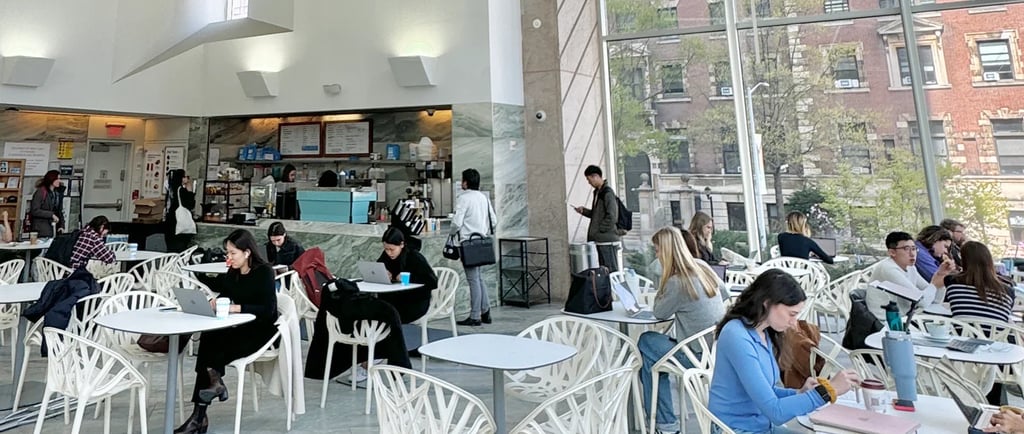
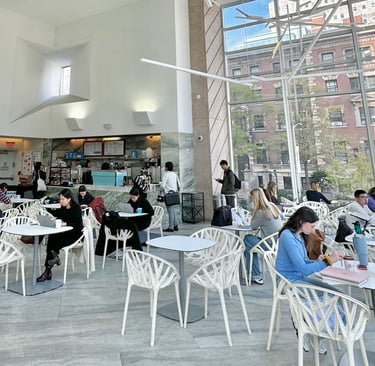
Every morning, I walk from Hastings Hall back to campus and pass the Joe Coffee in the North West Corner Building. By 8 am, the line is curling into the hallway. The tables are full. People balance laptops, problem sets, and sleep deprivation as they wait for the one thing guaranteed to pull them through the day: caffeine.
If you only looked at our coffee shops, you would think Columbia is a campus built on slow mornings and casual conversation. There are at least seven spots on campus to buy a cup of coffee. Warm branding, soft playlists and cute latte art make it cozy.
However, these spaces are used to tell a different story. The laptop screens glow with half‑finished essays. Another person is doing a problem set at 7 am. The coffee isn’t really about pleasure. It’s a tool, almost a kind of academic survival gear.
We don’t just drink coffee here; we build an identity around needing it.
Ask almost any Columbia student how they’re doing, and there’s a good chance the answer will involve caffeine: “I’m on my third coffee.” “I can’t function without cold brew.” “I didn’t sleep, but I have my matcha, so it’s fine.” We laugh it off, but underneath the joke is something less funny. It is an assumption that being exhausted and overcommitted is the normal, expected state of a Columbia student.
National data suggest this phenomenon isn’t just our campus being dramatic. In a survey of more than 1,200 U.S. college students, 92 percent had consumed caffeine in the past year. On average, they were taking in roughly 160–170 milligrams a day. Most said they turned to caffeine less for flavor and more to stay awake, focus, or feel energized. Caffeine on campus is less a treat than a legal performance‑enhancing drug.
The University did not invent coffee, but it certainly benefits from the culture around it. Our schedules, workloads, and extracurricular expectations push us toward a pace that few humans can meet without help. As we move into midterms and finals, that pressure intensifies. Assignments cluster, libraries stay full past midnight, and sleep slides to the bottom of the to‑do list. When rest feels like a luxury, coffee becomes the socially acceptable solution. It allows the system to keep running without having to slow down.
It is ironic that caffeine doesn’t fix the problem which it’s supposed to solve. According to Columbia Health’s own Sleep page, skimping on rest makes it harder to focus, react quickly, and process what you’re learning. It also noted that pulling all‑nighters is linked to next‑day sleepiness, low mood, and worse academic performance. The page even cautions students to steer clear of caffeine near bedtime because it interferes with restorative sleep. The same culture that celebrates our third latte of the day quietly undercuts the learning we came here for.
Columbia isn’t blind to the broader mental‑health crisis either. In a 2023 episode of Spectator’s podcast Pod‑Tone 292, student leaders from Nightline and Active Minds describe a campus where being “stressed, or depressed, or maybe both” feels normal, and where students often wait until things are “more extreme” before talking about it. Peer hotline and panel try to fill the gaps in official services, especially late at night, when academic pressure and intrusive thoughts hit hardest.
What we talk about less is how our caffeine habits help us hide that crisis—from ourselves and from each other. Carrying a coffee cup functions as a badge that says: I am busy. I am working. I belong here. To question that badge can feel like questioning our ambition or our right to be at Columbia. If you say you’re trying to sleep more and drink less caffeine—especially during exam season—people may half‑jokingly ask if you’ve given up. We treat “burned out but still going” as strength, and we treat slowness as failure.
I’m not arguing that we should all become caffeine‑free, perfectly rested people who never touch coffee. I would fail that assignment immediately. I’m writing this as someone who has stood in the Joe Coffee line after a three‑hour night, telling myself that my next latte is “motivation,” and who has felt the crash when it isn’t.
What I am arguing is that we should stop pretending this is normal or harmless.
The alternative is not to ban coffee, but to change what it means. What if “This is my fourth coffee” didn’t get a laugh but a follow-up question: “Why are you sleeping so little?” What if we were as willing to ask “Did you get a break?” as we are “Did you get your coffee?” What if professors stopped reading hyper-caffeinated productivity as commitment? Instead, professors started treating it as a red flag—especially when Columbia’s own health resources spell out the academic consequences of sleep deprivation?
On an institutional level, this could mean seriously evaluating how course loads and extracurricular expectations shape our sleep. This could also represent asking departments to solve the problem of quietly rewarding all-nighters during midterm and finals seasons. Culture-wide, this could show equally valuing the student who says, “I am going to sleep. I’ll do my best at this tomorrow,” as much as the one reveling in their all-nighter and venti cold brew. Coffee could be back to being what it was originally intended to be: to enjoy with your friend right before heading to class, rather than framing our entire identities.
So next time you find yourself getting coffee in the morning, especially during the coming exam season, look around. Ask yourself: what would you be doing if you had gotten two more hours of sleep instead? What would our campus look like if coffee were a choice rather than a crutch?
At Columbia, we may not need less ambition. We just may need a culture that doesn’t require us to be this tired—and change our relationship with coffee to reflect that.