Use Desktop for Better Experience
January 2026 Global Market News
January 2026 didn’t deliver a clean reset. It was a month where geopolitics repriced risk premia, central banks tried to hold the line, and the precious‑metals “debasement trade” went from euphoric to violent in days—culminating in one of the sharpest gold/silver drawdowns in decades.
FINANCIAL
Ryan Cheng
2/1/20264 min read
United States 🇺🇸
-Jan 20: Tariff headlines hit risk appetite & stocks sell off-
On January 20, U.S. equities dropped sharply after President Trump threatened new tariffs tied to the Greenland dispute; the S&P 500 fell ~2.1%, the Nasdaq ~2.4%, and the Dow ~1.8% in AP reporting.
-Jan 28: The Fed paused & rates held at 3.50%–3.75% (with dissents)-
The FOMC maintained the target range at 3‑1/2 to 3‑3/4 percent. Importantly, two voters (Stephen I. Miran and Christopher J. Waller) dissented, preferring a 25 bp cut—another reminder that “steady” doesn’t mean “one view.”
-Jan 28: Implementation mechanics stayed front-and-center (reserve “plumbing” continued)-
The Fed’s Implementation Note kept IORB at 3.65% (effective Jan 29), kept the standing repo rate at 3.75% and the ON RRP at 3.5% (with a $160B per‑counterparty daily limit), and reiterated guidance to purchase Treasury bills (and, if needed, other Treasuries with ≤3 years remaining maturity) to maintain “ample” reserves.
-Jan 30: Fed leadership becomes the macro catalyst—Warsh nomination shocks “debasement” trades-
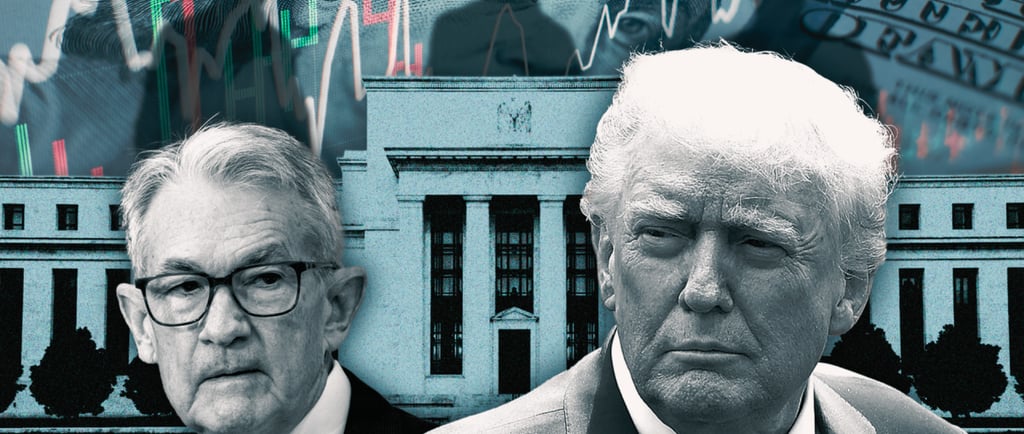
On January 30, President Trump announced he would nominate Kevin Warsh to succeed Jerome Powell as Fed chair. Markets treated it as a regime‑signal: the dollar strengthened and gold/silver collapsed in the same session.
-Jan 30: Risk assets wobble, but January still finished up-
On January 30, the S&P 500 closed at 6,939.03 (down 0.4% on the day) while the Nasdaq fell 0.9% as the Warsh news hit tape and precious metals unwound. Still, by month‑end, reporting put the Dow (+1.7%), S&P 500 (+1.4%), and Nasdaq (+0.9%) modestly higher for January.
Hong Kong 🇭🇰
-Jan 9: MiniMax IPO—AI hype meets real equity demand-
Chinese AI startup MiniMax Group said it raised HK$4.82B (≈$618.6M) in its Hong Kong IPO (priced at HK$165). Separate reporting described a dramatic first‑day surge (closing ~109% higher in one account), reinforcing how much of the early‑2026 Hong Kong IPO bid is AI‑linked.
-Jan 22: HKMA published the Hong Kong Taxonomy (Phase 2A)-
HKMA released Phase 2A of the Hong Kong Taxonomy for Sustainable Finance, positioning it as a key framework for green/transition classification and sustainable capital flows.
-Jan 26: RMB liquidity upgrade—RMB Business Facility doubled to RMB 200B-
HKMA announced the total size of the RMB Business Facility would increase from RMB 100B to RMB 200B, effective Feb 2, citing full allocation of the initial quota and growing demand for offshore RMB financing.
-Jan 29: HKMA tracked the Fed—base rate held at 4.00%, risk message repeated-
After the Fed held rates, HKMA reiterated that U.S. policy uncertainty remains a key input for Hong Kong’s rate environment, and public communications warned borrowers/investors to manage interest‑rate risk. Market reporting also described HKMA keeping its base rate at 4%.
Global Central Banks: “Hold” was the default—Japan stayed the volatility outlier
-Bank of Japan (Jan 23): held at ~0.75%, but the vote was not clean-
The BoJ set the guideline for money‑market operations so the uncollateralized overnight call rate remains around 0.75%, decided by an 8–1 vote. Board member Hajime Takata dissented, proposing around 1.0%.
-Bank of Canada (Jan 28): held at 2.25% (trade policy uncertainty stays a core risk)-
BoC maintained its policy rate at 2.25% and emphasized vulnerability to unpredictable U.S. trade policies and elevated geopolitical risks.
-ECB (January): no rate meeting, but operational plumbing moved forward—and the euro area expanded-
The ECB published amendments to monetary policy implementation guidelines, effective March 30, 2026, including updates related to collateral rules and resolution‑related access conditions. ECB financial‑statement communications noted Bulgaria adopted the euro on Jan 1, 2026, bringing the Bulgarian National Bank into the Eurosystem. The ECB’s own calendar shows the next relevant Governing Council meeting for reserve‑maintenance scheduling was Feb 5, 2026—i.e., January was a “between‑meetings” month for euro‑area rate policy.
Commodities
-Jan 26: Gold and silver hit fresh records on tariff + shutdown anxiety-
Late‑January risk headlines pushed haven demand; reporting described gold moving above $5,100/oz and silver surging into triple digits as markets priced geopolitical and U.S. fiscal uncertainty.
-Jan 30: The reversal—gold and silver suffer worst day since 1980-
After Trump’s Warsh nomination, the “debasement trade” unwound violently: reports described gold down ~11% and silver down ~31% in a single session—among the steepest one‑day moves in decades.
-Jan 31: Volatility-control mode—CME raised margins for gold/silver-
Following the plunge, CME announced higher margin requirements for Comex gold and silver futures—classic post‑shock risk management that can amplify deleveraging.
-Natural gas: Winter Storm Fern rewrote the U.S. energy tape-
A late‑January cold shock drove Henry Hub futures as high as $7.43/mBtu in one report (a sharp jump from mid‑month), with extreme regional spot spikes as production and logistics were disrupted.
-Oil: geopolitics mattered more than the 2026 surplus narrative—at least early in the month-
The IEA described Brent jumping into the mid‑$60s amid uncertainty around Iran and Venezuela exports. Meanwhile, OPEC+ held output policy steady and maintained the pause in planned hikes through Q1 while also agreeing a mechanism for assessing capacity baselines.
Others
-China FX mechanics: CFETS basket weights reset (effective Jan 1)-
Reuters reported China would adjust CFETS yuan basket weightings for 2026—reducing weights of several major currencies (including USD and EUR) in its routine annual update—effective January 1, 2026.
-U.S. shutdown risk returned to the macro stack at month‑end-
Late‑January headlines featured renewed shutdown risk and fast‑moving negotiations—another factor feeding safe‑haven bids earlier in the week and complicating the near‑term economic‑data calendar.