Use Desktop for Better Experience
Should We Subscribe to Lung Fung Group’s IPO?
Based on the IPO prospectus information available as of May 29, 2026. *This is not financial advice.
FINANCIALSELECTED
Ryan Cheng
5/30/20267 min read


Investment Recommendation
Neutral
*
*Stocks and investments carry risks, including the loss of principal. The views expressed on this blog are solely the opinions of the author at the time of writing and are subject to change at any time without notice.
**Source of image: etnet
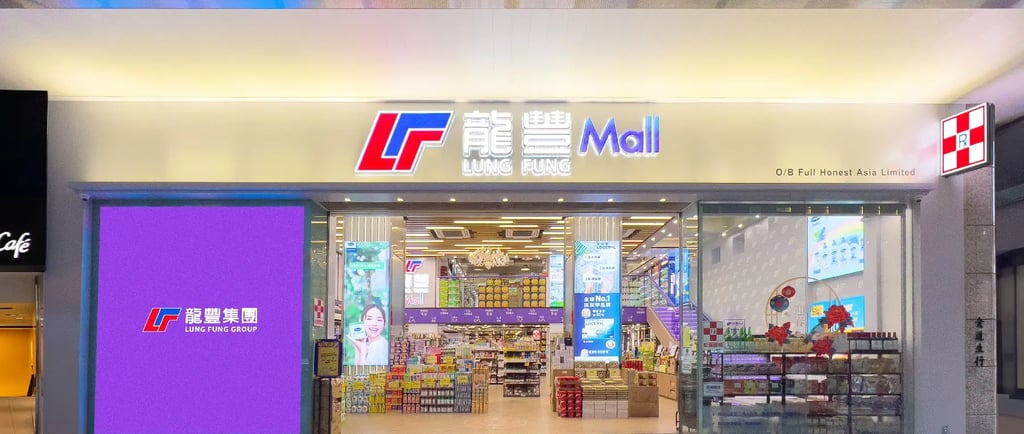
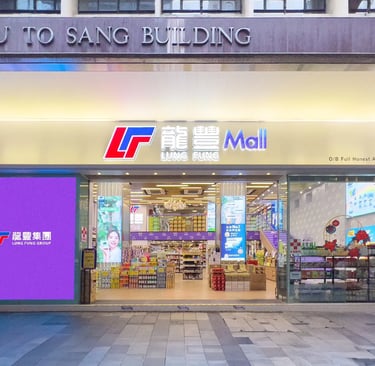
Lung Fung Group is an interesting Hong Kong IPO because it has something many newly listed companies lack: a business that ordinary consumers can actually see. It has real stores, visible foot traffic in some districts, and a brand that is familiar to many Hong Kong shoppers and mainland tourists. That makes it tempting to think of the company as a straightforward retail growth story.
But after reading through the prospectus, I would be careful. I do not see enough evidence to call it a “fake revenue” story, but I also do not think this is the kind of IPO that deserves aggressive margin financing. My view is simple: small cash subscription for IPO trading is acceptable if you like the deal, but I would not heavily subscribe or treat it as a long-term buy before seeing post-listing results.
Is Lung Fung Really a Market Leader?
The answer depends on how the market is defined.
According to the prospectus, Lung Fung ranked third in Hong Kong’s beauty products, healthcare products and medicine retail market by retail sales value in FY2025, with a market share of about 5.8%. Within medicine retail specifically, it ranked first with around 5.2% market share. By revenue, it was the third-largest medicine and healthcare product retailer in Hong Kong, with around 4.2% market share.
That means Lung Fung can claim leadership in a narrow segment, especially medicine retail, but it is not a dominant retailer across the whole Hong Kong consumer market. Even in its core category, the market remains fragmented. The top five players in Hong Kong’s beauty, healthcare and medicine retail market together accounted for only 27.4% of the market. Lung Fung’s share is meaningful, but not overwhelming.
So I would describe Lung Fung as a strong niche player, not a monopoly-like market leader.
The Store Expansion Is Real, But That Is Also the Main Question
One reason investors may be attracted to Lung Fung is its rapid store expansion. As of the latest practicable date in the prospectus, the group operated 31 retail stores in Hong Kong, with over 123,000 square feet of total usable floor area. The stores were spread across Hong Kong Island, Kowloon and the New Territories.
This physical expansion supports the argument that Lung Fung is not just a paper company. It has actual shops, inventory, staff, rents and customers. The company also carried a broad product range, with over 28,800 SKUs sold in FY2025 and typically more than 9,000 SKUs stocked per store.
However, the key issue is not whether the stores exist. They clearly do. The more important question is whether the revenue growth is organic and sustainable.
In FY2025, Lung Fung opened nine new stores and ended the financial year with 25 stores. The prospectus indicates that new stores contributed significantly to revenue growth, while same-store sales showed a slight decline. For the first eight months of FY2026, comparable-store revenue was broadly stable.
That tells me the growth story is heavily driven by store openings rather than explosive same-store growth. This is not necessarily bad. Many successful retailers grow by expanding their store network. But it does mean investors should be careful not to mistake expansion-driven revenue growth for structural same-store demand growth.
If new store locations perform well, the company can keep growing. But if rents rise, tourist spending weakens, or new stores cannibalize existing stores, the growth story could slow quickly.
Revenue Looks Supported, But Not Fully De-Risked
From the prospectus, Lung Fung’s reported revenue grew from about HK$1.09 billion in FY2023 to HK$2.02 billion in FY2024, then to HK$2.46 billion in FY2025. For the first eight months of FY2026, revenue was about HK$2.04 billion.
Profitability also improved sharply. The company recorded a loss of around HK$27.1 million in FY2023, then made a profit of about HK$145 million in FY2024 and HK$170 million in FY2025. For the first eight months of FY2026, profit was about HK$148 million. The company also estimated that profit attributable to owners for the year ended March 31, 2026 would be no less than HK$265 million.
On the positive side, most of Lung Fung’s revenue comes from retail stores rather than large wholesale transactions. In FY2025, retail stores contributed about 97.2% of total revenue. Online platforms contributed only 1.7%, and wholesale contributed 1.1%.
That matters because retail-store revenue is generally easier for auditors and regulators to cross-check using POS records, payment data, inventory movement, supplier invoices, rental footprints and tax filings. The company’s financial information was also reported on by Deloitte as reporting accountant.
Still, outside investors cannot fully verify the underlying POS data. We cannot personally audit every receipt, cash transaction, inventory movement or store-level performance. So I would not say the revenue is proven beyond doubt. I would say the available public information does not provide direct evidence of fake revenue, but the pace of growth and reliance on new stores mean investors should demand post-listing proof.
For me, the real test will come after listing: whether Lung Fung can continue to report healthy revenue without aggressive pre-IPO expansion, and whether same-store sales can return to growth.
The Gross Margin Is the Heart of the Story
One of the most important parts of the Lung Fung IPO is gross margin.
The group’s overall gross margin increased from 24.9% in FY2023 to 29.3% in FY2024, then to 31.6% in FY2025. For the first eight months of FY2026, gross margin was 30.9%.
The most striking figure is the healthcare products segment. Its gross margin rose from 38.7% in FY2023 to 48.9% in FY2024, then to 54.9% in FY2025. For the first eight months of FY2026, it remained high at 54.6%.
That is a very important number. If Lung Fung can genuinely sustain high margins in healthcare products through direct sourcing, private-label products, scale advantages and product mix improvement, then the company’s earnings power is stronger than a typical low-margin retailer.
But if this margin is near a cyclical or temporary high, the valuation becomes less attractive. A few percentage points of gross margin decline could have a large impact on net profit.
In my opinion, the sustainability of the healthcare-product margin is one of the biggest uncertainties in the IPO.
The Biggest Red Flags: Dividends, Net Current Liabilities and Debt Repayment
The part that makes me most cautious is the balance sheet and pre-IPO capital movement.
In FY2025, the relevant subsidiaries declared dividends of about HK$255 million to shareholders. In February and May 2026, the company declared further dividends totaling about HK$153 million, which were settled by offsetting amounts due from related parties.
This does not automatically mean anything improper happened. Pre-IPO dividends are common. But from the perspective of new investors, the optics are not ideal. Existing shareholders extracted a meaningful amount of value before listing, while IPO proceeds will partly be used to strengthen the company’s financial position.
The company also had net current liabilities at the end of FY2023, FY2024, FY2025 and as of November 30, 2025. As of November 30, 2025, net current liabilities were still about HK$397 million.
In addition, around 20% of the net IPO proceeds, or approximately HK$134.4 million, is expected to be used to repay outstanding loans.
That is a key point. This is not a company listing with an extremely clean, cash-rich balance sheet and raising money purely for growth. Part of the IPO is effectively being used to repair or improve the financial structure.
For that reason, I would be very reluctant to use margin financing to subscribe heavily.
Valuation Is Not Crazy, But It Requires Confidence
The IPO price range is HK$5.18 to HK$6.38 per share. Based on 500 million shares after listing, the implied market capitalization is about HK$2.59 billion to HK$3.19 billion.
Using the company’s estimated FY2026 profit of at least HK$265 million, the implied price-to-earnings ratio is roughly 9.8 times to 12.0 times. That does not look expensive if the FY2026 earnings level is sustainable.
But if we use FY2025 profit of around HK$170 million, the valuation rises to roughly 15.2 times to 18.7 times earnings. That is less obviously cheap for a retailer whose growth depends heavily on new stores and whose margins may be difficult to maintain.
So the valuation is not absurd. It is reasonable only if you believe FY2026 profit is not a peak and the company can keep expanding profitably after listing.
My View: Small IPO Trade, Not a High-Conviction Long-Term Buy Yet
I do not think Lung Fung should be dismissed as a bad company. It has a visible retail network, a recognizable brand, meaningful market share in its niche, and strong reported growth. The business is real in the sense that the stores exist and the company has built scale in Hong Kong’s medicine, beauty and healthcare retail market.
But I also do not think the IPO is clean enough for aggressive subscription. The concerns are not minor: same-store sales were not clearly strong, growth was helped significantly by new store openings, healthcare-product margins are very high, the company had net current liabilities, pre-IPO dividends were substantial, and part of the IPO proceeds will be used to repay debt.
If I were treating this purely as a short-term IPO trade, I might consider a small cash application. I would avoid margin financing. If the final offer price is set at the top end and grey-market sentiment is weak, I would be even more cautious.
For long-term investors, I think the better opportunity may come after listing. The first annual or interim results as a public company will be much more useful than the IPO story. I would want to see whether same-store sales improve, whether gross margin remains above 30%, whether healthcare-product margins stay above 50%, whether inventory and payables remain normal, and whether the company’s net current liability position improves after the IPO.
Until then, my rating on the IPO is neutral to cautious.